
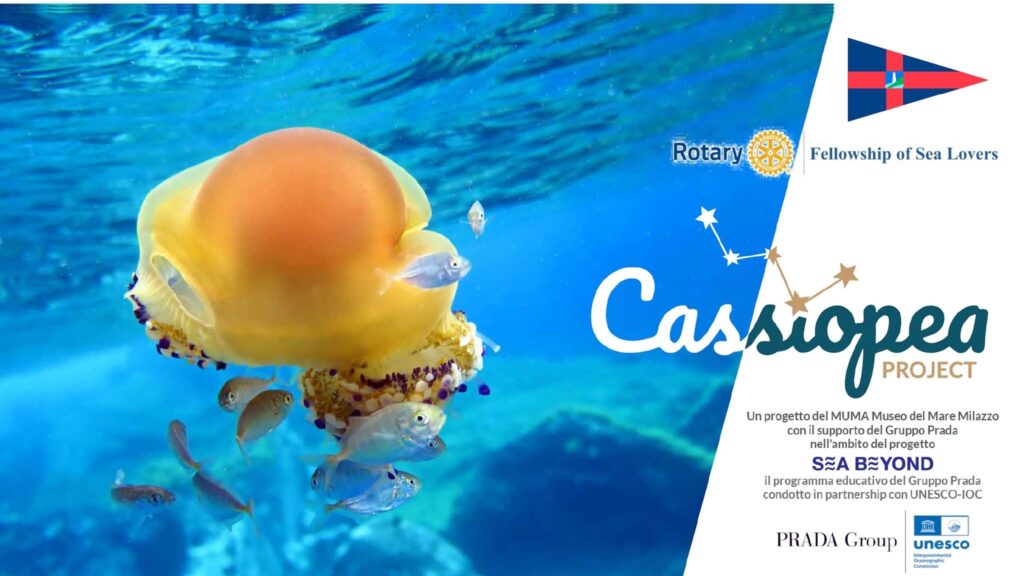
MILAZZO, Italy – A sailboat transformed into an eco-sustainable oceanographic vessel has already begun its voyage, carrying a message of knowledge, sustainability and care for the sea. Its name is Cassiopea, and its mission is as ambitious as it is timely.
Project “Cassiopea” is an initiative of the MuMa – Museo del Mare Milazzo, supported by SEA BEYOND, the Prada Group’s educational program run in partnership with UNESCO’s Intergovernmental Oceanographic Commission.
Fitted with modern oceanographic instruments, the vessel now works as a floating research laboratory. Its crew monitors marine environments and studies the effects of human activity on the sea, with particular attention to plastic and microplastic pollution.
Education is at the heart of the mission. Through meetings in schools, ports and yacht clubs, Cassiopea will promote the principles of Ocean Literacy. At each stop, the program will include presentations, educational and awareness-raising activities, citizen science experiences and initiatives dedicated to protecting marine and coastal habitats.
The Rotary Fellowship of Sea Lovers (RFSL) has signed a Memorandum of Understanding with the MuMa, creating a framework for cooperation in science outreach, environmental education, cultural promotion and the protection of the marine environment. Under the agreement, the Fellowship is pleased to offer its patronage and promotional support to Project “Cassiopea.”
The Fellowship hopes to involve Rotary and Rotaract clubs in the areas where Cassiopea will call. Clubs can help welcome the vessel, present the project to their communities, build connections with schools, young people, institutions, yacht clubs and environmental associations, and promote the educational and awareness activities linked to each landing.
In this way, every port of call can become an opportunity to bring together Rotary friendship, scientific knowledge, environmental responsibility and service to the community.
“We look forward to sharing Cassiopea’s journey with the Rotary community and working together so that its message can reach the Italian coastline and the entire Mediterranean,” the Fellowship said: to discover the beauty of our sea, to value it and, ultimately, to protect it.
Friendship, service and the sea: stronger together.
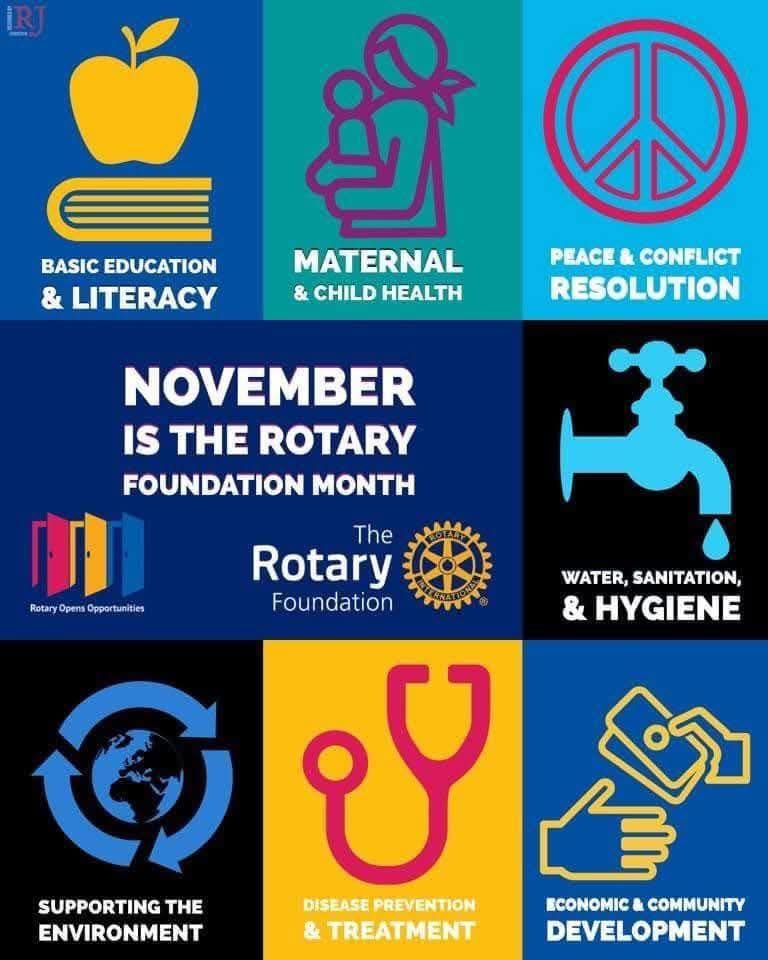
NOVEMBER IS THE ROTARY FOUNDATION MONTH
The Rotary Foundation transforms your gifts into life-changing projects both close to home and around the world. As the charitable arm of Rotary International, we draw on a global network of Rotarians who invest their time, money, and expertise in our priorities, such as eradicating polio and promoting peace. The Foundation empowers Rotarians to address challenges like poverty, illiteracy, and malnutrition with sustainable solutions that create lasting impact.
Strong financial oversight, an outstanding charity rating, and a unique funding model allow us to make the most of your contribution. Give and become part of Rotary’s life-changing work!
The collective leadership and expertise of our 1.2 million members help us tackle some of the world’s greatest challenges—both locally and globally. We are united by shared values and visions for the future, while focusing our efforts on specific causes that reach the communities most in need.
GUIDING PRINCIPLES
For more than 100 years, our guiding principles have been the foundation of our values and traditions. The Four-Way Test, the Object of Rotary, and the Avenues of Service express our commitment to service, fellowship, diversity, integrity, and leadership.
AREAS OF FOCUS
We direct our efforts across seven key areas to maximize our local and global impact. Our most successful and sustainable projects and activities generally fall into the following categories:
• Promoting peace
• Fighting disease
• Providing clean water
• Saving mothers and children
• Supporting education
• Growing local economies
• Protecting the environment
HISTORY OF THE ROTARY FOUNDATION
At the 1917 convention, outgoing RI President Arch C. Klumph proposed setting up an endowment “for the purpose of doing good in the world.” In 1928, it was renamed The Rotary Foundation and became a distinct entity within Rotary International.
GROWTH OF THE FOUNDATION
In 1929, the Foundation made its first donation of $500 to the International Society for Crippled Children. The organization, founded by Rotarian Edgar F. “Daddy” Allen, later grew into Easter Seals.
When Rotary’s founder Paul Harris passed away in 1947, contributions began pouring into Rotary International, and the Paul Harris Memorial Fund was created to strengthen the Foundation.
EVOLUTION OF FOUNDATION PROGRAMS
1947: The Foundation established its first program, Fellowships for Advanced Study, later known as Ambassadorial Scholarships.
1965–66: Three programs were launched — Group Study Exchange, Technical Training Awards, and Matching Grants, aligned with the Foundation’s mission.
1978: Rotary introduced Health, Hunger, and Humanity (3-H) Grants. The first 3-H Grant funded a project to immunize six million Filipino children against polio.
1985: The PolioPlus program was launched to eradicate polio worldwide.
1987–88: The first Peace Forums were held, leading to the establishment of Rotary Peace Fellowships.
2013: New District, Global, and Packaged Grants enabled Rotarians worldwide to respond to major global needs.
2019: The Programs of Scale initiative began, supporting large-scale projects with grants of up to USD 2 million.
From the first donation of $26.50 in 1917, the Foundation has received contributions totaling over $3 billion — all dedicated to doing good in the world.